The Complete Guide to Roses: Types and Varieties, Color, Numbers, Occasions and Care
The rose is the most familiar flower — and the most misunderstood. Behind the simple word "roses" hide dozens of varieties, growing regions and shades, and each of them speaks its own language. ROZY florists put this guide together as a desk reference: we will cover what kinds of roses exist, what their colors mean, how many roses etiquette says to give, which bouquet fits which occasion and how to make a cut bouquet last. In short — after this article you will choose roses with more confidence than many sellers.
What's inside this guide
- Rose types and varieties: where they come from and how they differ
- Peony, spray, meter-long and single-head roses
- Rose colors and what they mean
- How many roses to give: the symbolism of numbers
- Which roses to pick for the occasion
- Caring for cut roses and extending a bouquet's life
- Common mistakes and FAQ
Rose types and varieties: what you are actually buying
The first thing to understand: a "rose" in a flower shop is not one flower but a whole category. Roses differ by country and growing method, by bush type and the number of buds per stem, by stem length and by variety group. These traits determine the price, how long the flowers last and how the bouquet will look a week from now. Let's take it step by step.
Dutch, Kenyan and locally grown roses
By origin, cut roses are most often split into three big groups — and for a buyer this is the most practical way to think about them.
- Dutch roses. Greenhouse roses from the Netherlands (and similar European farms) — the benchmark of consistent quality. A dense, neat bud, a straight sturdy stem, predictable color and good vase life all year round. This is the workhorse of floristry: most classic bouquets are built from Dutch roses. If you want a guaranteed, even result, go for Dutch roses.
- Kenyan roses. African roses from high-altitude farms in Kenya and Ethiopia. The bud is usually a bit smaller and the stem thinner, but the price is lower — and with proper care they last beautifully. A Kenyan rose is the smart choice for big armfuls and generous bouquets where volume matters more than the size of each individual head.
- Locally grown roses. Roses from Kazakhstani and nearby regional greenhouses. Their main advantage is freshness: they don't spend a week traveling halfway around the world, so they reach your vase "younger". The range of varieties is narrower, but as an everyday fresh option they often win precisely thanks to the short supply chain.
Ecuadorian roses — the premium tier
Ecuadorian roses stand apart. High altitude, abundant sunshine and a stable climate let the plant grow powerful: a large head 6–8 cm across, a long thick stem, dense petals and rich, saturated color. It is Ecuadorian varieties that most often become those famous "meter-long" roses. They cost more than Dutch or Kenyan ones, but when the goal is to make an impression, there are few alternatives. Ecuador means size, grandeur and a bouquet that photographs beautifully.
Peony roses and David Austin varieties
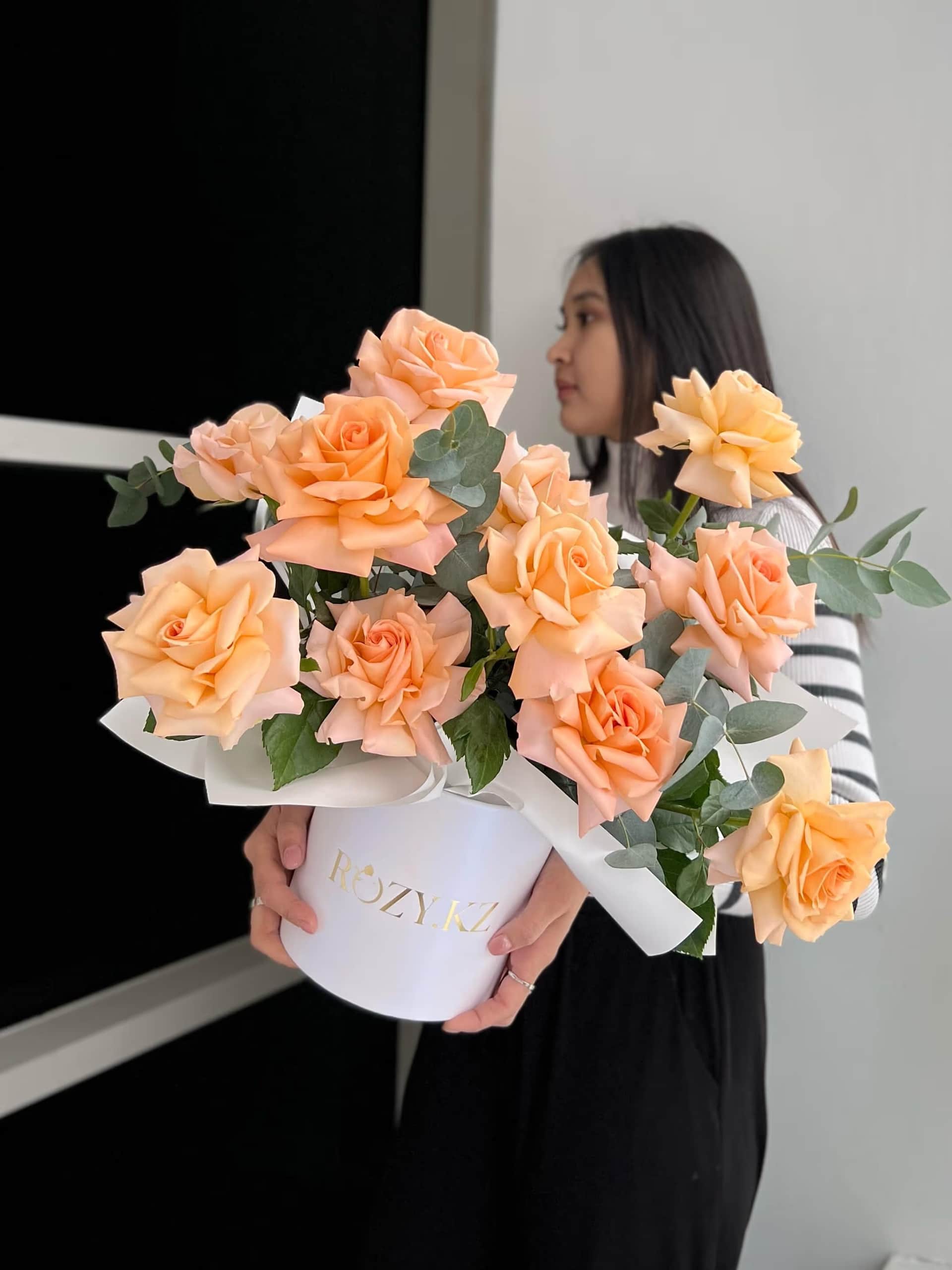
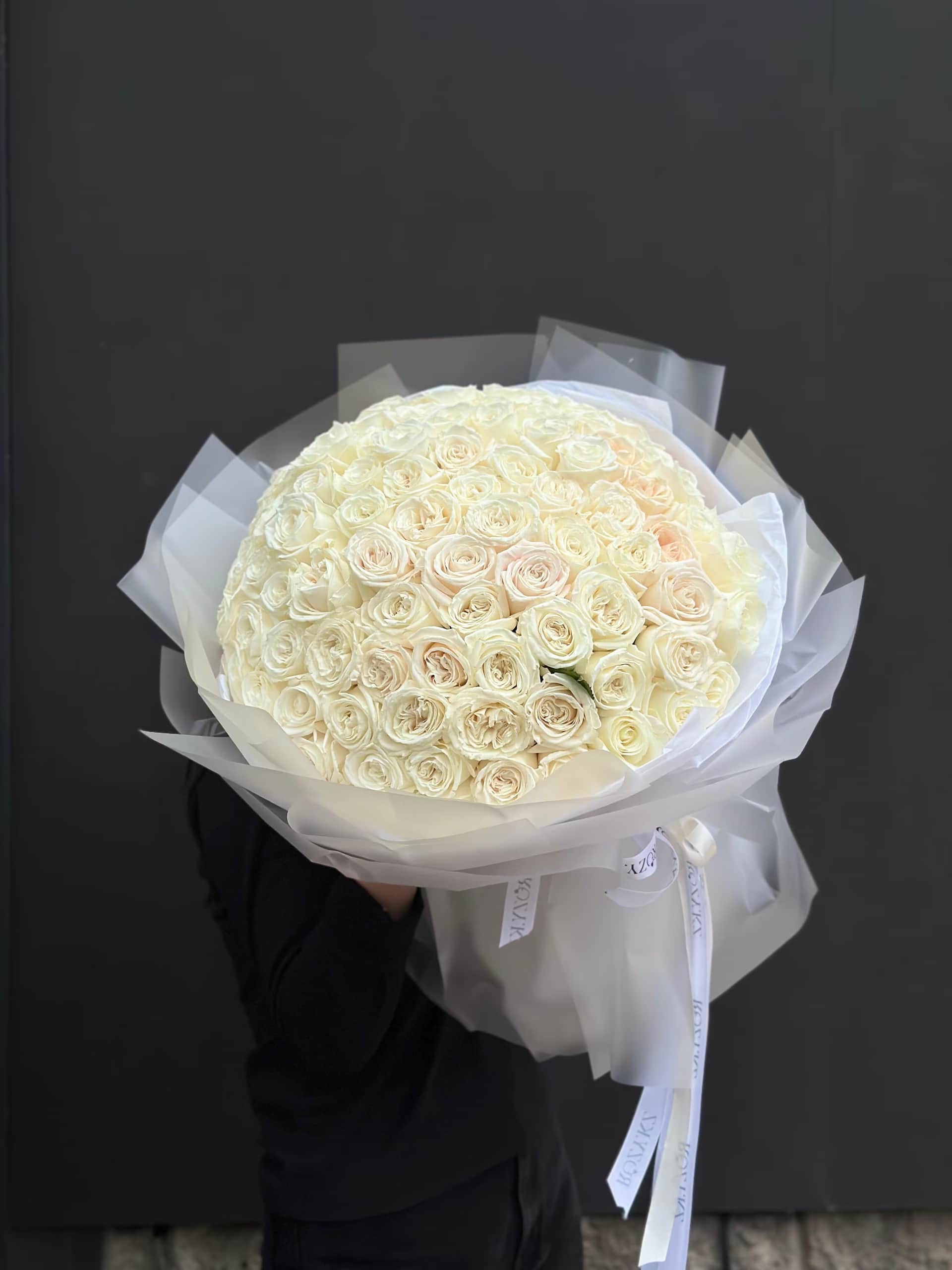
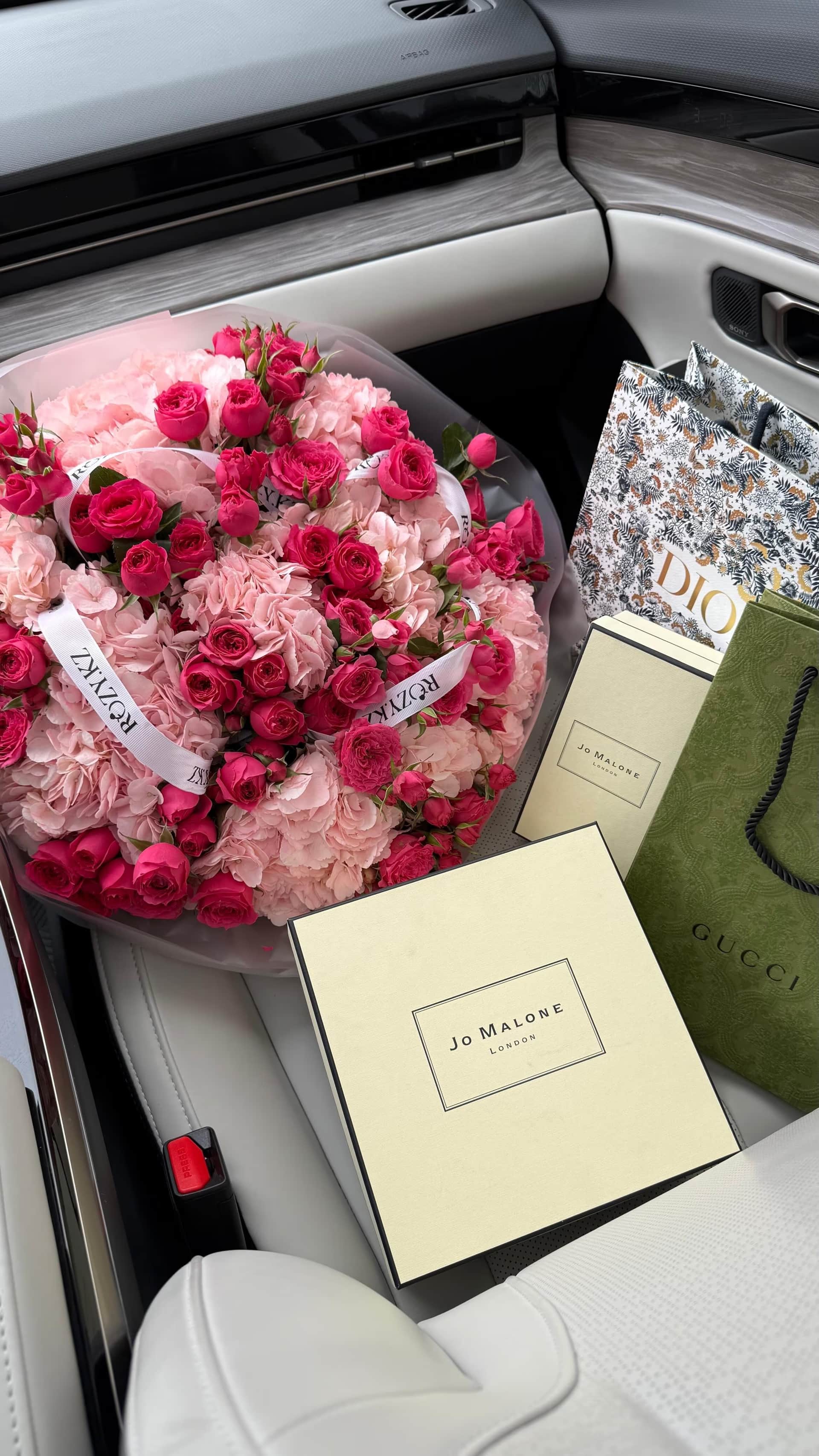
Peony roses are a love story — and a trend — of their own. They have a densely petaled, globe-shaped bud with dozens of petals that opens lush and full, like a peony. Many of the best peony varieties were bred by the English rose breeder David Austin: "Austins" have the nostalgic shape of an old garden rose and often a pronounced fragrance — exactly what regular cut roses tend to lack. If you want a romantic, expensive-looking bouquet, take a look at peony roses and the classic David Austin roses.
Among peony roses, the Juliet variety deserves special mention — a warm apricot-peach shade with a dense bud and a delicate fragrance. It is one of the most in-demand wedding varieties: equally beautiful in a bridal bouquet and as a romantic gift. If that exact shade and shape is what you are after, these are Juliet roses.
A note on fragrance — a frequent source of disappointment. Most cut roses you see in shops were bred for vase life, size and shipping resilience, not for scent, so they smell faint. This is not a "scam" but a feature of commercial varieties: a strong fragrance usually means more delicate petals that fade faster. If scent truly matters to you, look specifically at the fragrant groups — many Austin varieties, certain peony roses and garden roses have a noticeable perfume. An honest florist will tell you this upfront rather than promise "a scent straight from the garden" from an ordinary Dutch rose.
Variety groups and popular cultivars
Within every color there are specific varieties with their own character — these are the ones florists call by name. You don't have to memorize the names, but knowing them helps you order a predictable result instead of getting "something red instead of the one you meant".
- Red: Red Naomi (a large fragrant classic), Explorer and Freedom (a dense Ecuadorian bud, deep color) — favorites for declarations of love.
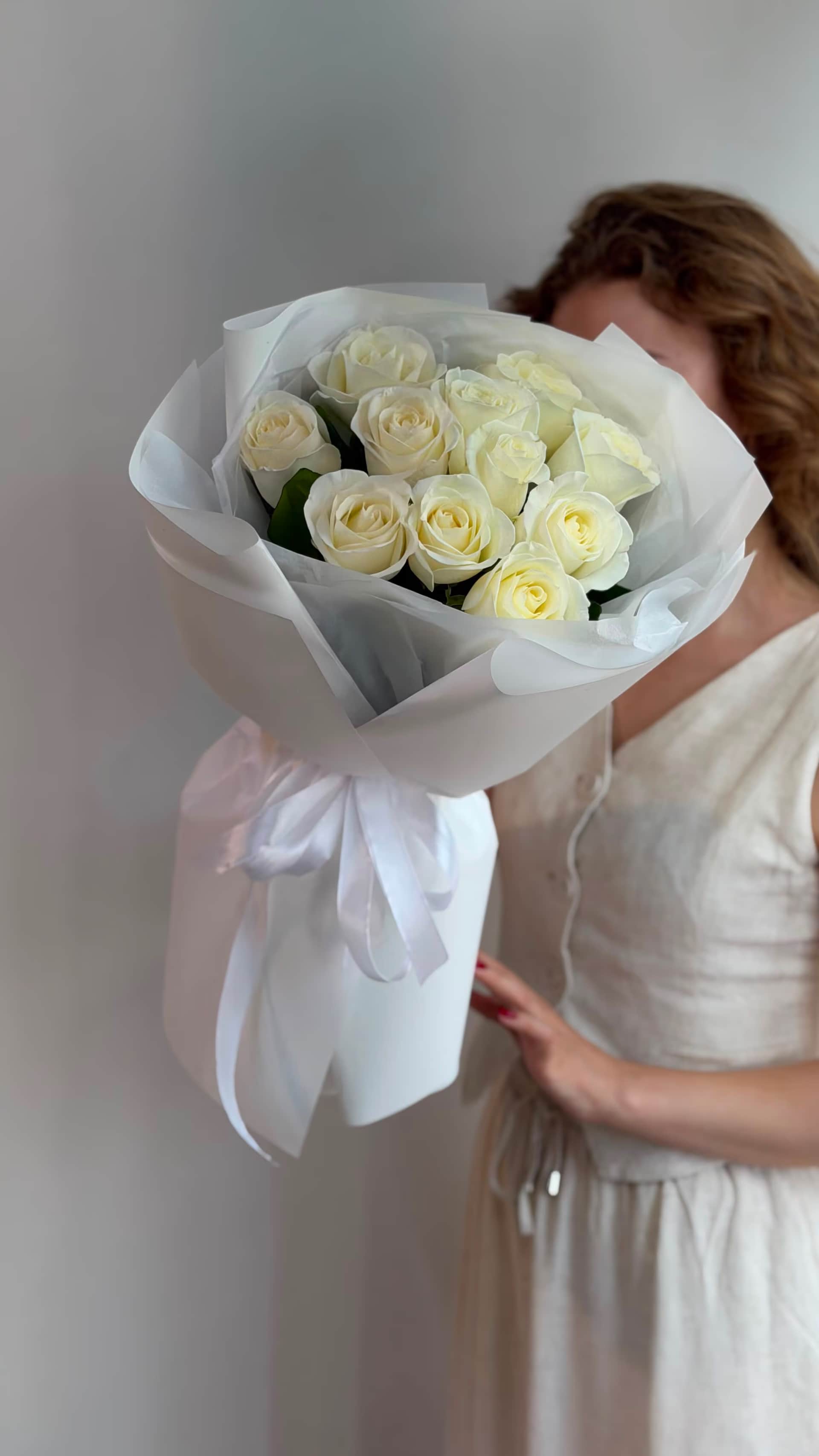
- White and cream: Mondial, Vendela, Playa Blanca — the go-to of wedding floristry for their clean, even tone.
- Pink and nude: Pink Mondial, Mandala, Quicksand (dusty pink, hugely popular in aesthetic, editorial-style bouquets).
- Peony-shaped: Juliet, Keira, Charity, David Austin Constance — lush form and often fragrance.
- Bicolor and unusual: varieties with a color gradient from the center to the edge of the petal — they look expensive and shine in a single-variety bouquet.
The varieties in stock change with the season and deliveries, so the best way to choose is to describe to the florist the color, bud shape and "mood" you want rather than chase a specific name. A professional will pick the closest available match that looks exactly the way you imagined.
Single-head, spray and meter-long roses
By stem structure, roses are divided into single-head and spray types. A single-head (hybrid tea) rose carries one large bud per stem — the classic you count by the piece: 11, 25, 51 roses. A spray rose carries several small buds on one branching stem: it adds volume and airiness, works brilliantly as a filler and in romantic, garden-style bouquets.
A separate category by length is the meter-long rose: varieties on stems of 80–100 cm and above, usually Ecuadorian, with a large head. They look as ceremonial as it gets and suit high-status occasions. One practical note: a bouquet like this needs a tall, stable vase. When the occasion calls for grandeur, these are meter-long roses.
Comparing rose types: a quick table
Need a decision in under a minute? Check the table. We unpack each parameter in detail throughout the article, but the overall logic of the choice is visible at a glance.
| Rose type | Character | When to choose it |
|---|---|---|
| Dutch | Consistent quality, even bud | A classic bouquet for any occasion |
| Kenyan | Affordable price, smaller bud | Big armfuls, voluminous bouquets |
| Locally grown | Maximum freshness | An everyday fresh bouquet |
| Ecuadorian | Large head, long stem | Premium, the wow effect |
| Peony / Austin | Lush bud, fragrance | Weddings, romance |
| Spray | Many small buds | Airy, garden-style bouquets |
| Meter-long | 80–100 cm stem | Milestones, high-status occasions |
Rose colors and what they mean
The color of a rose is a message that needs no words. The very same bouquet can say "I love you", "I'm proud of you" or "forgive me" — the shade decides everything. Let's go through the main colors and when — and to whom — each is appropriate.
Red and burgundy — love and passion
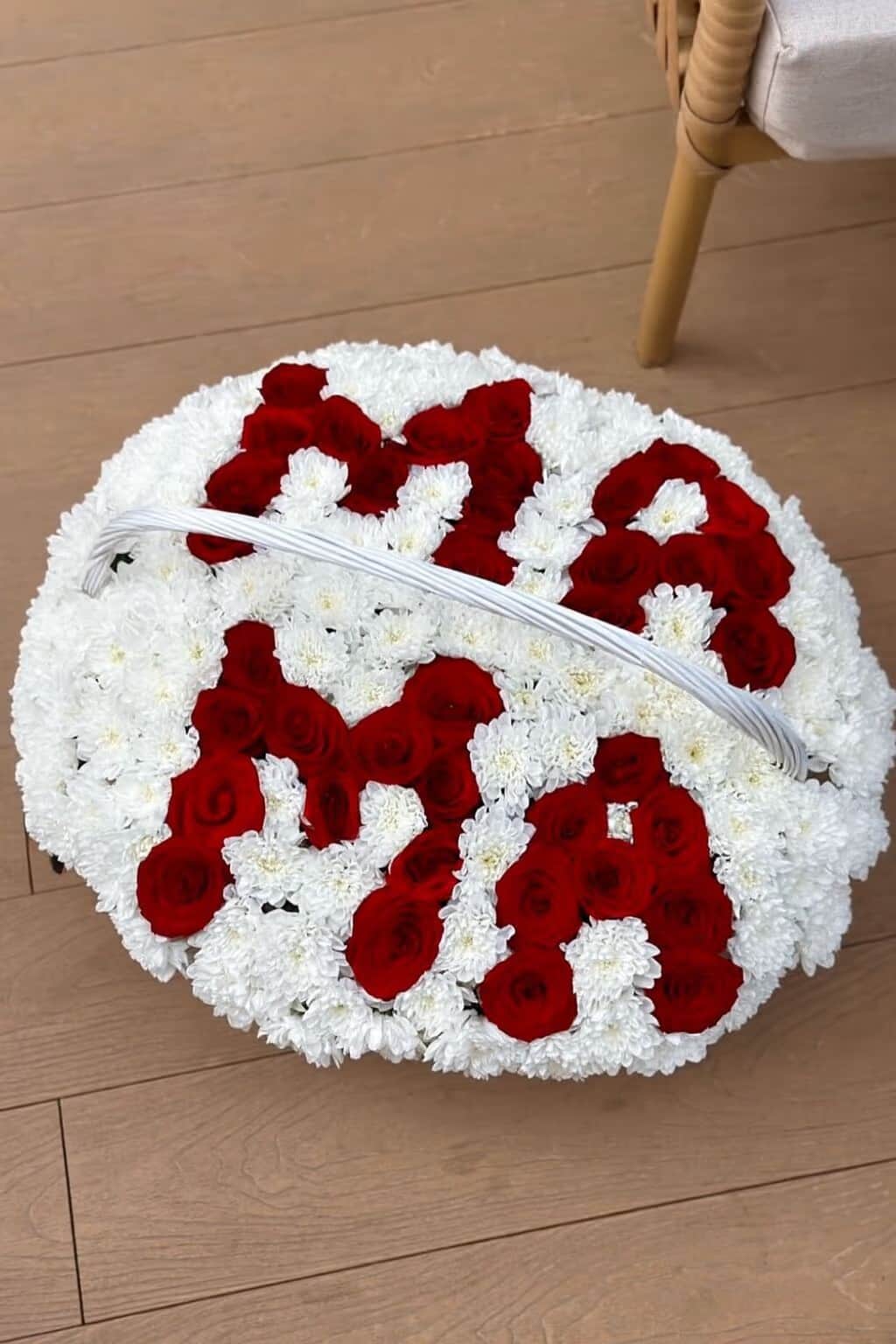
Red is the most powerful color in a bouquet and a direct declaration of love. Bright scarlet speaks of newly ignited passion, while deep burgundy stands for mature, devoted love. Red roses are for a date, an anniversary, February 14 and any moment when you want your feelings to speak for themselves. A tip from practice: saturated red belongs between partners and spouses — to a colleague or someone you barely know it can feel too personal. If romance is the occasion, these are red roses.
White — purity and a new beginning
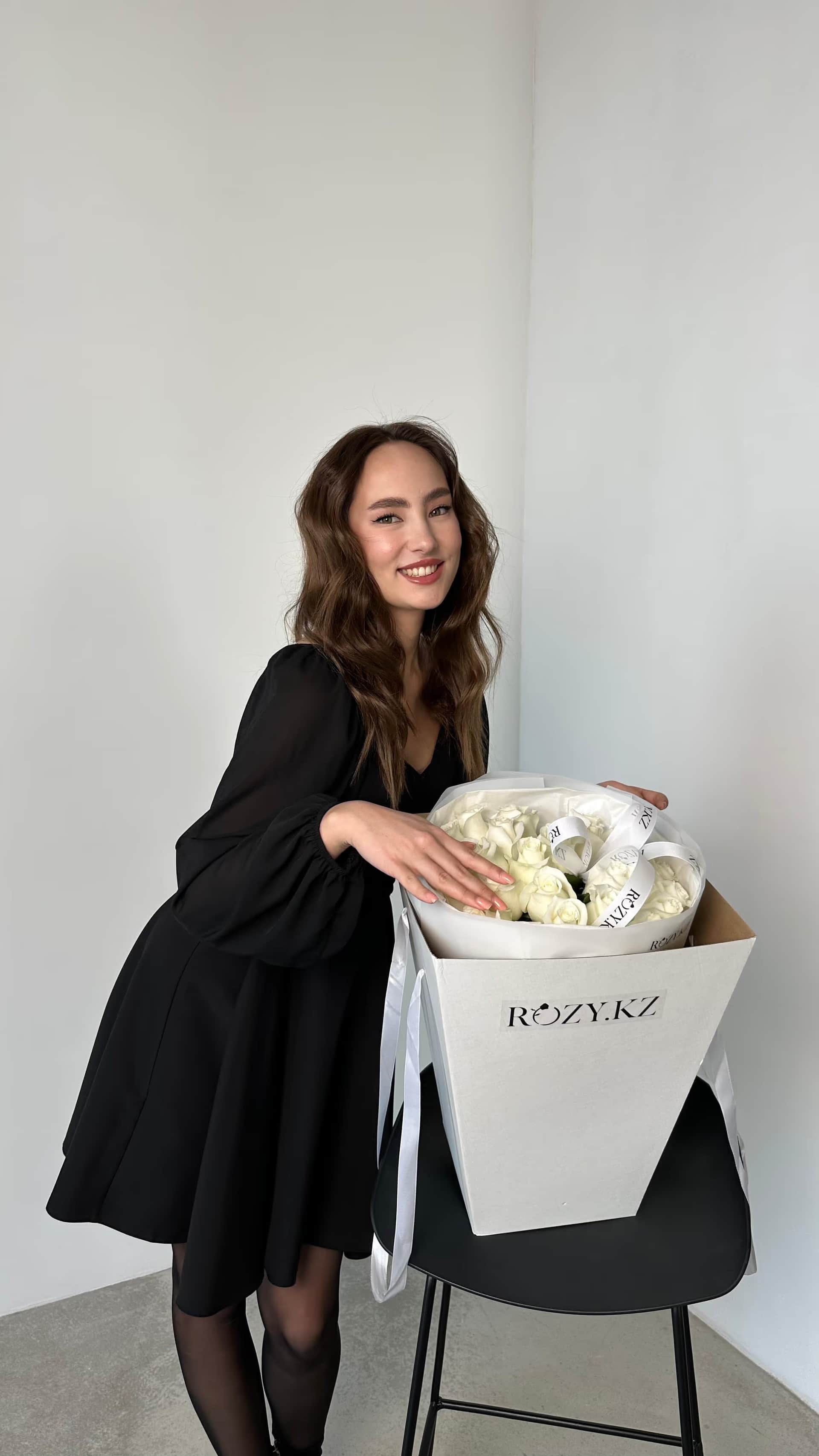
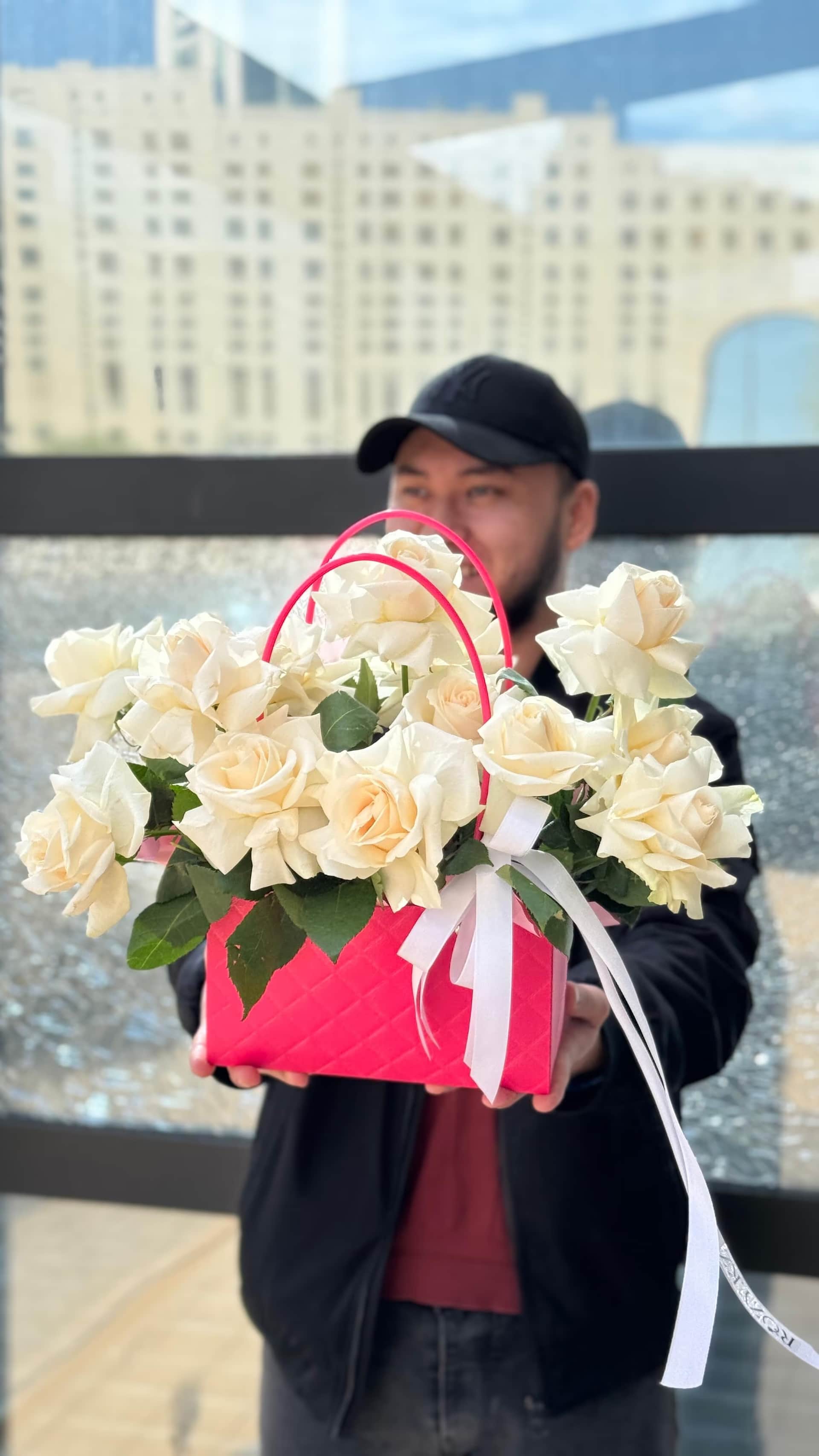
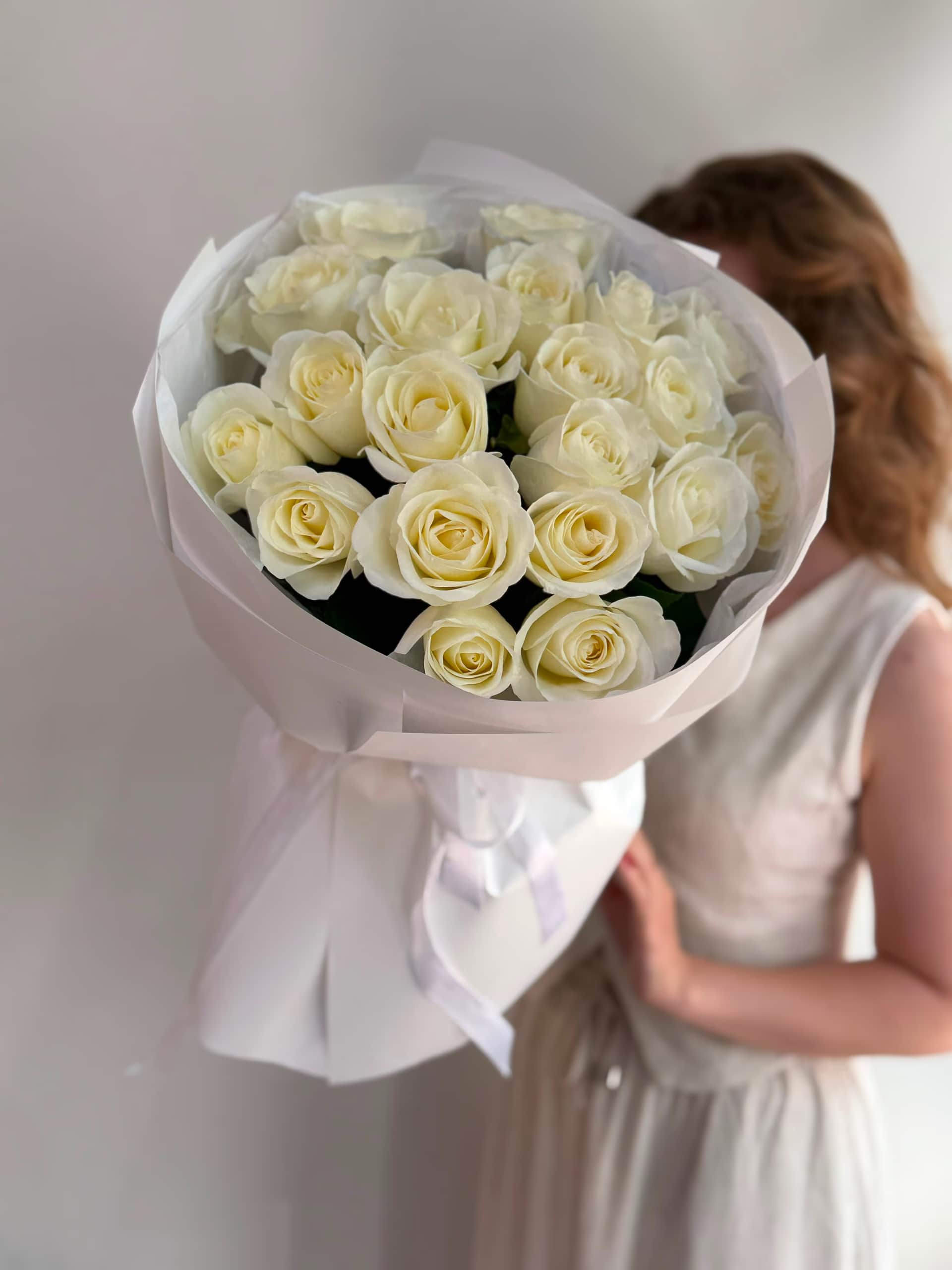
White roses symbolize purity, sincerity and a fresh start — which is why they are a fixture of wedding floristry and bridal bouquets. They are the right choice as a mark of deep respect, for a formal congratulation, as a peace offering where red would feel too intense, and for a woman you are only getting to know: white carries no pressure. For understated elegance, browse our white bouquets.
Pink — tenderness without pressure
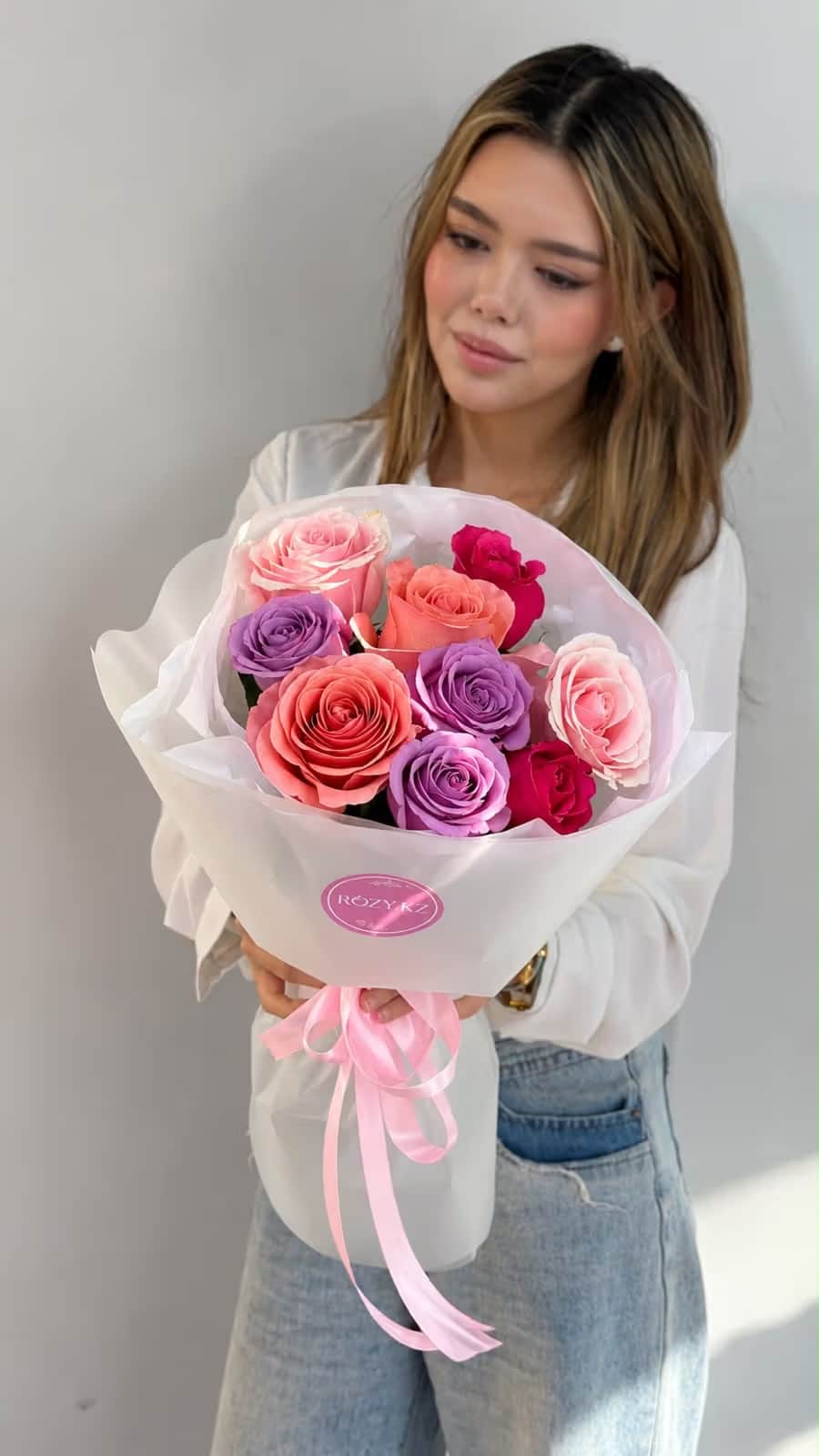
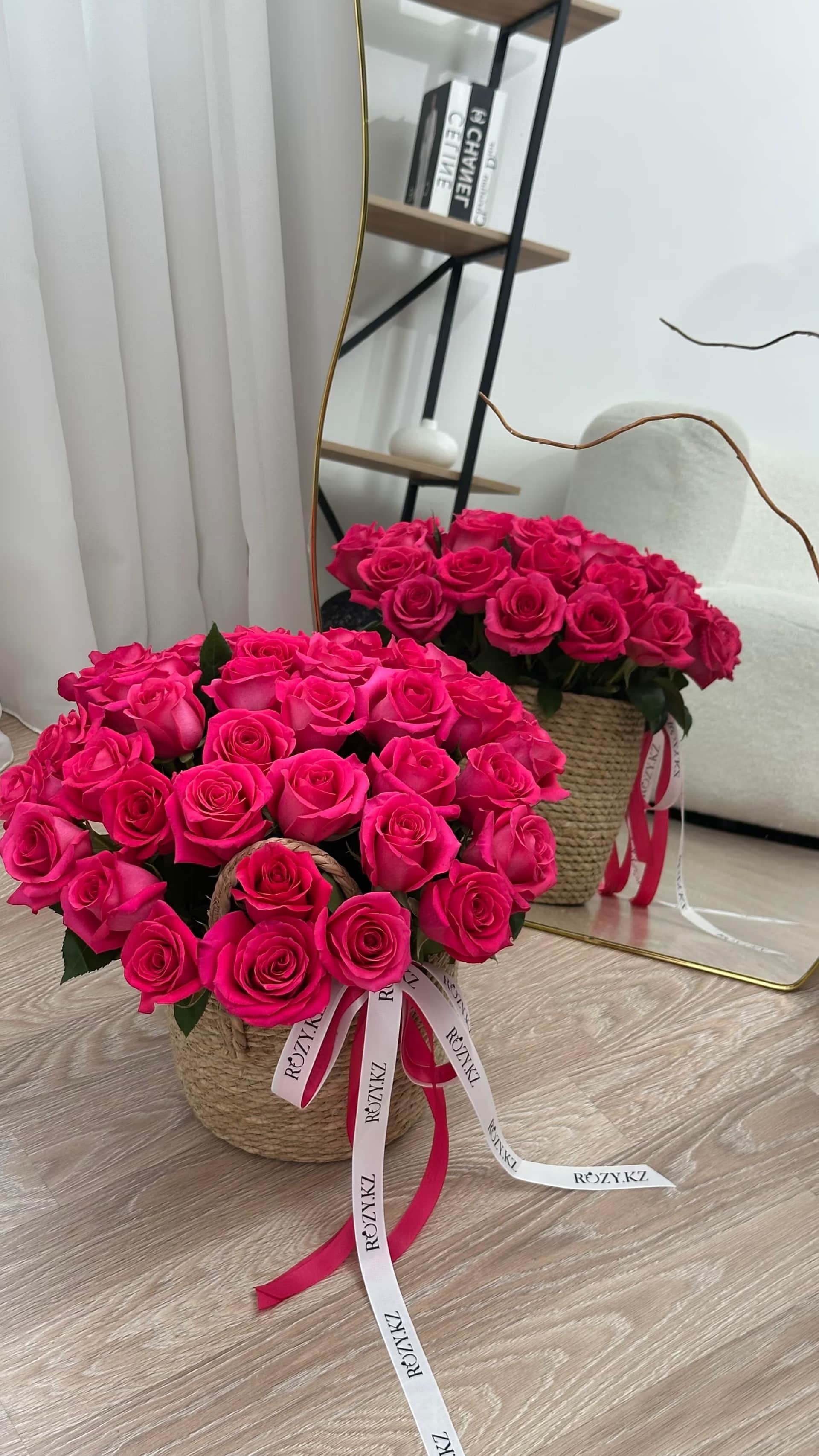
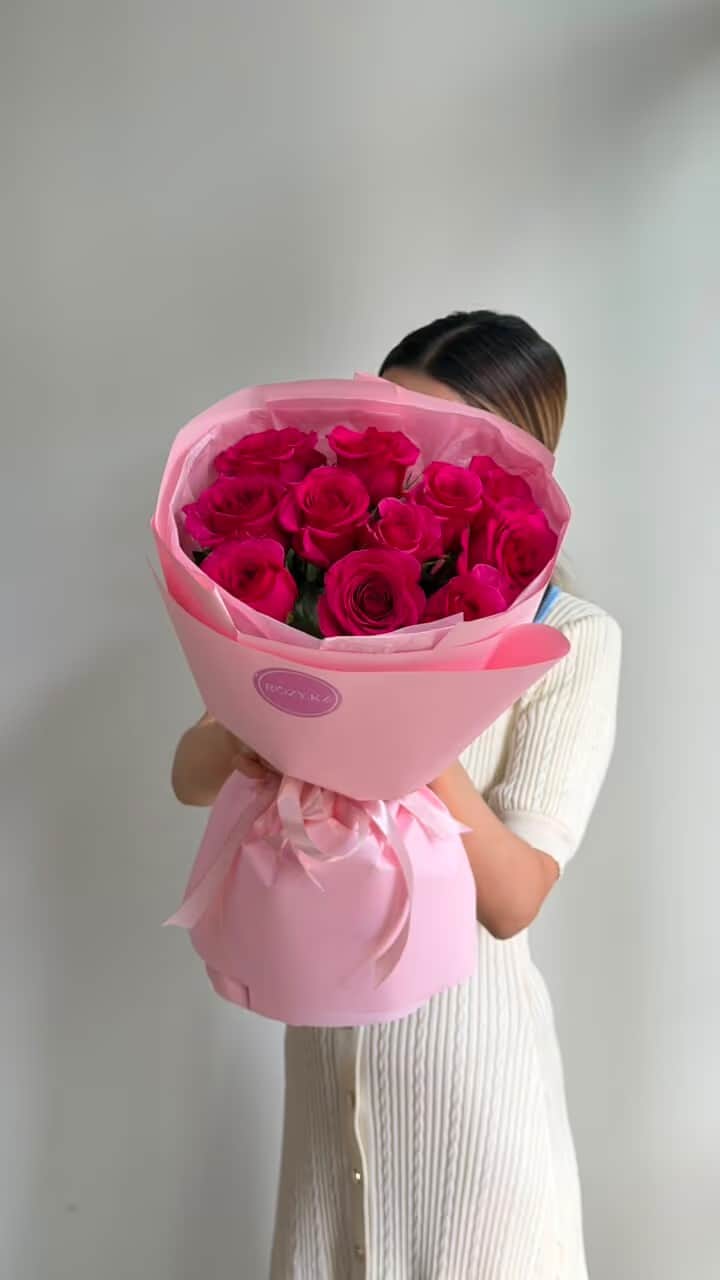
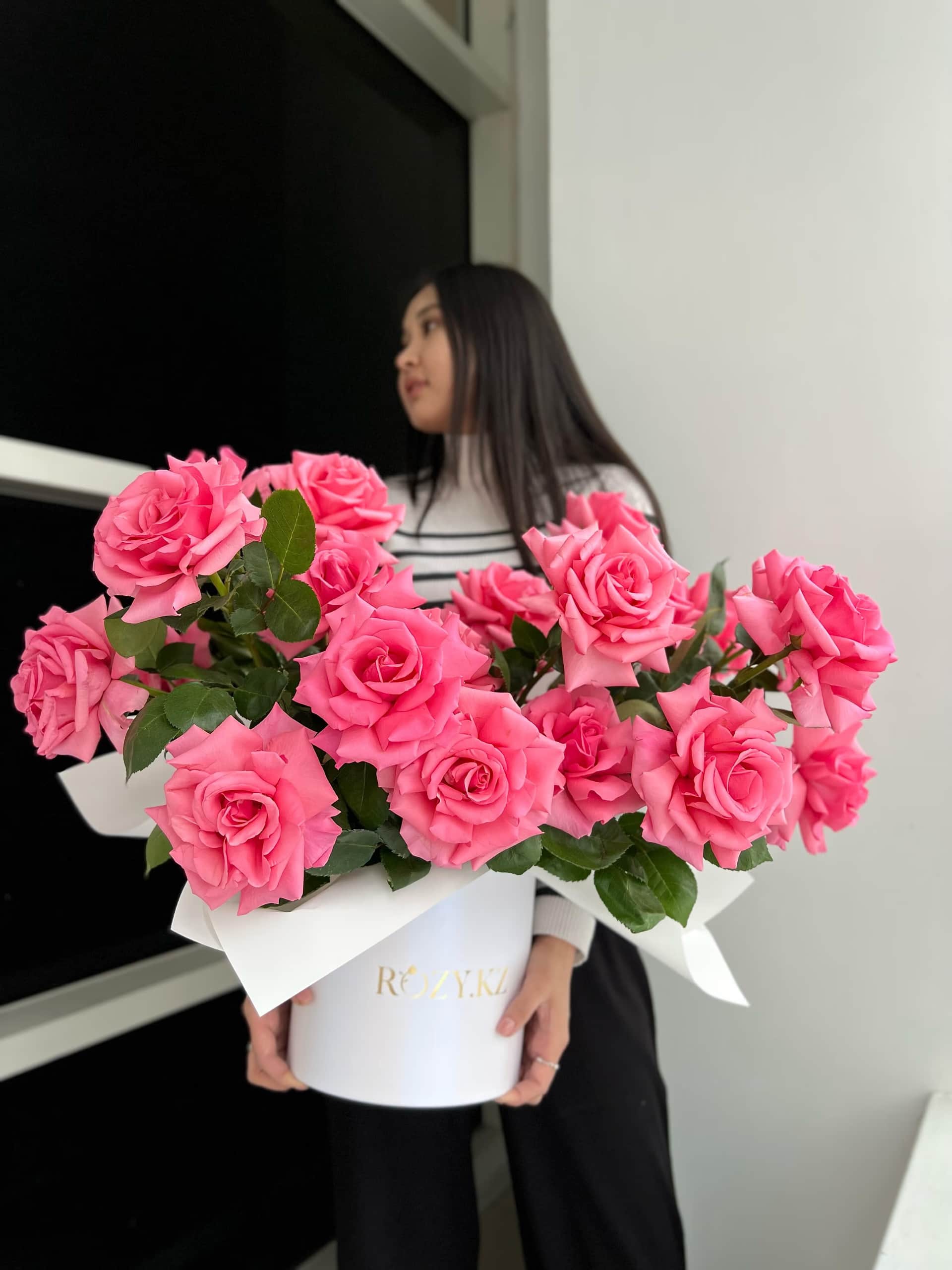
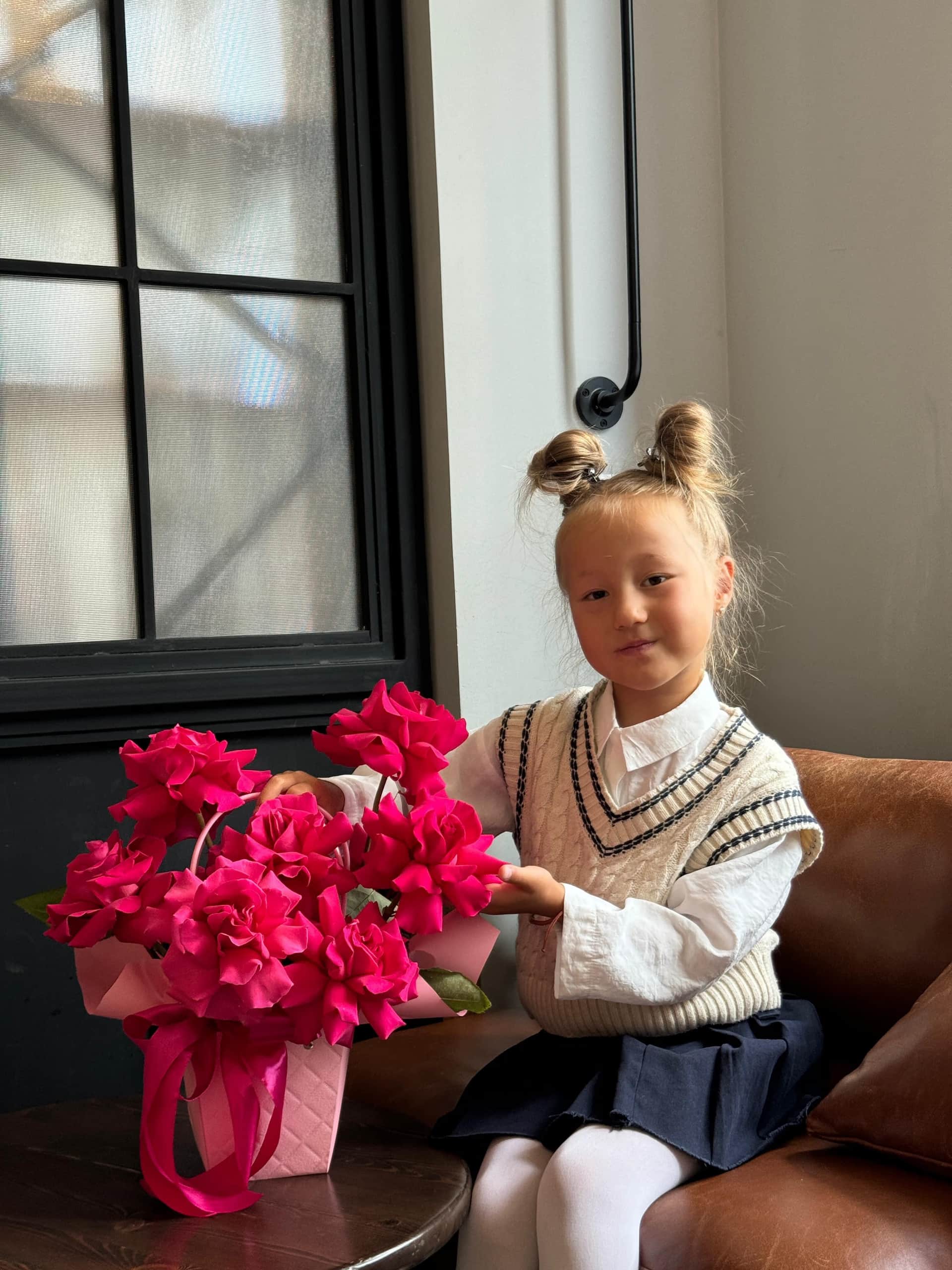
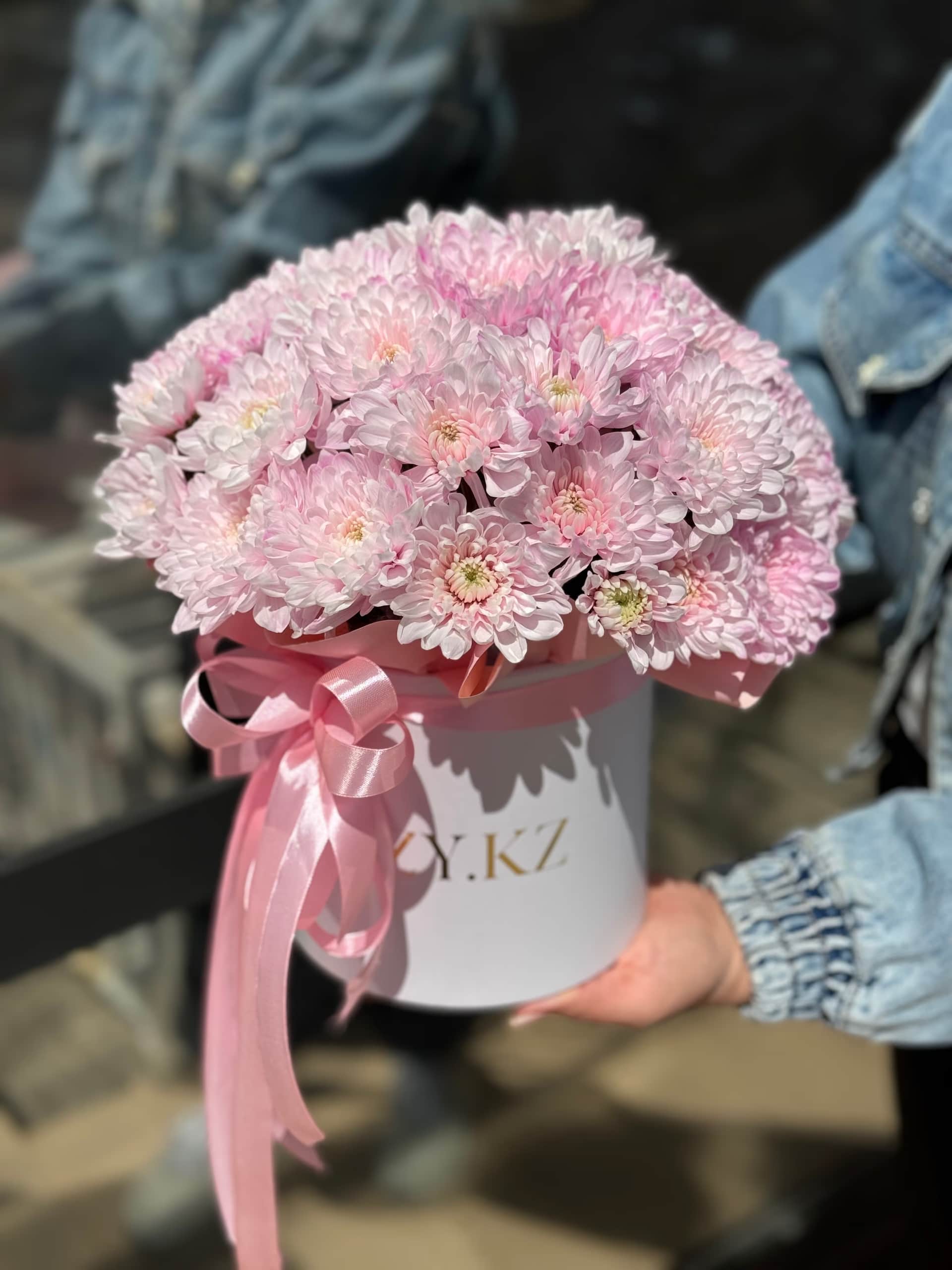
Pink is the golden middle between friendship and love — the most universal color and the hardest to misread. Light pink conveys admiration, gratitude and tenderness; deep pink (fuchsia) expresses appreciation and respect. It is the perfect pick for your mother, a friend, a mentor — or for a woman when red feels like too bold a move. Pastel shades are lovely for birthdays and March 8 — these are pink roses.
Yellow — friendship and joy
The biggest myth in floristry is that yellow roses "mean parting". In reality, yellow stands for friendship, joy, care and wishes of success. Such a bouquet is perfect for a friend, a colleague, your parents or a professional holiday; and if you mix yellow with red, you get a symbol of reconciliation and a warm new chapter. For a burst of positivity — these are yellow roses.
| Color | What it symbolizes | Who to give it to |
|---|---|---|
| Red | Love, passion | Your loved one, on a date |
| Burgundy | Mature, deep love | Spouses, anniversaries |
| White | Purity, a new beginning | Weddings, as a mark of respect |
| Pink | Tenderness, gratitude | Mom, a friend, early affection |
| Yellow | Friendship, joy | Friends, colleagues, parents |
How many roses to give: the symbolism of numbers
In Kazakhstan and across the CIS a simple rule applies: roses are given as a gift in odd numbers. Even numbers are associated with funeral flowers, so 1, 3, 5, 7, 11, 15, 25, 51 and 101 are the "right" numbers for a gift. One important caveat: the odd-number rule matters up to roughly 11–15 stems. When there are many roses — 25, 51, 101 — people perceive them as an armful and no longer count stem by stem, so round numbers are perfectly appropriate there.
- 1 rose — a short, eloquent "you are the one". Perfect for a first date, a gesture of attention without grand words.
- 3 roses — a laconic compliment, "I like you". A good option for a light occasion.
- 5 roses — a warm wish, a neutral and universal gesture.
- 7–11 roses — an intimate token of affection, the classic for a date or a small celebration.
- 15 roses — noticeable yet not "loud": great for a birthday or just because. See 15 roses.
- 25 roses — a serious intention and a substantial gift. These are 25 roses.
- 51 roses — a generous declaration, a show-stopping armful for a major occasion. See 51 roses.
- 101 roses — a statement remembered for a lifetime: a proposal, a milestone, a grand gesture. This is 101 roses.
A practical rule of thumb: the closer the relationship and the bigger the occasion, the more roses are appropriate. And remember — quantity amplifies the color's message: 25 scarlet roses read very differently from 5.
Which roses to choose for the occasion
Variety, color and quantity should be chosen not separately but for the specific situation. What makes the rose so convenient is that it fits almost any occasion — you just need to get the "formula" of shade, size and variety right. Here is how we think it through in our own flower studio for the most common cases.
A date
A first date doesn't call for grandeur — precision of the gesture matters more. A single red rose or a small bouquet of 5–7 roses says exactly as much as needed without creating awkward pressure. If the relationship is just beginning, soft pink is the safer bet: it speaks of affection more gently. With every next date you can "raise the stakes" — both in quantity and in the intensity of color.
A birthday
For a birthday, almost any bright, joyful bouquet works. Pink and pastel tones suit your mom or a friend; richer shades suit someone close to you. A good middle-ground is 15–25 roses: noticeable, festive and not demanding an anniversary-level occasion. If the recipient loves the unusual, lean on peony varieties — they look more expensive than they cost. And when the birthday person is a man, don't rule roses out: a strict single-variety bouquet of dark burgundy long-stemmed roses reads solid and businesslike, especially in restrained wrapping.
A wedding
A wedding is the territory of white and pastel roses and peony varieties. A bridal bouquet should be light and sit comfortably in the hand, so bud shape and fragrance are valued here over quantity. Varieties like Juliet and the Austin roses are wedding floristry favorites precisely for their romantic, old-garden form. For guest tables and head-table arrangements, sturdier Dutch and Ecuadorian roses are the usual choice.
An apology
An apology is a delicate occasion where loud red can come across as pressure. White or soft pink roses are the safer choice — they speak of sincerity and the wish to start over. Be sure to add a short handwritten card: flowers set the tone, but words close the matter. Keep the size modest: the gesture should read as care, not as an attempt to buy forgiveness.
A tip from ROZY florists
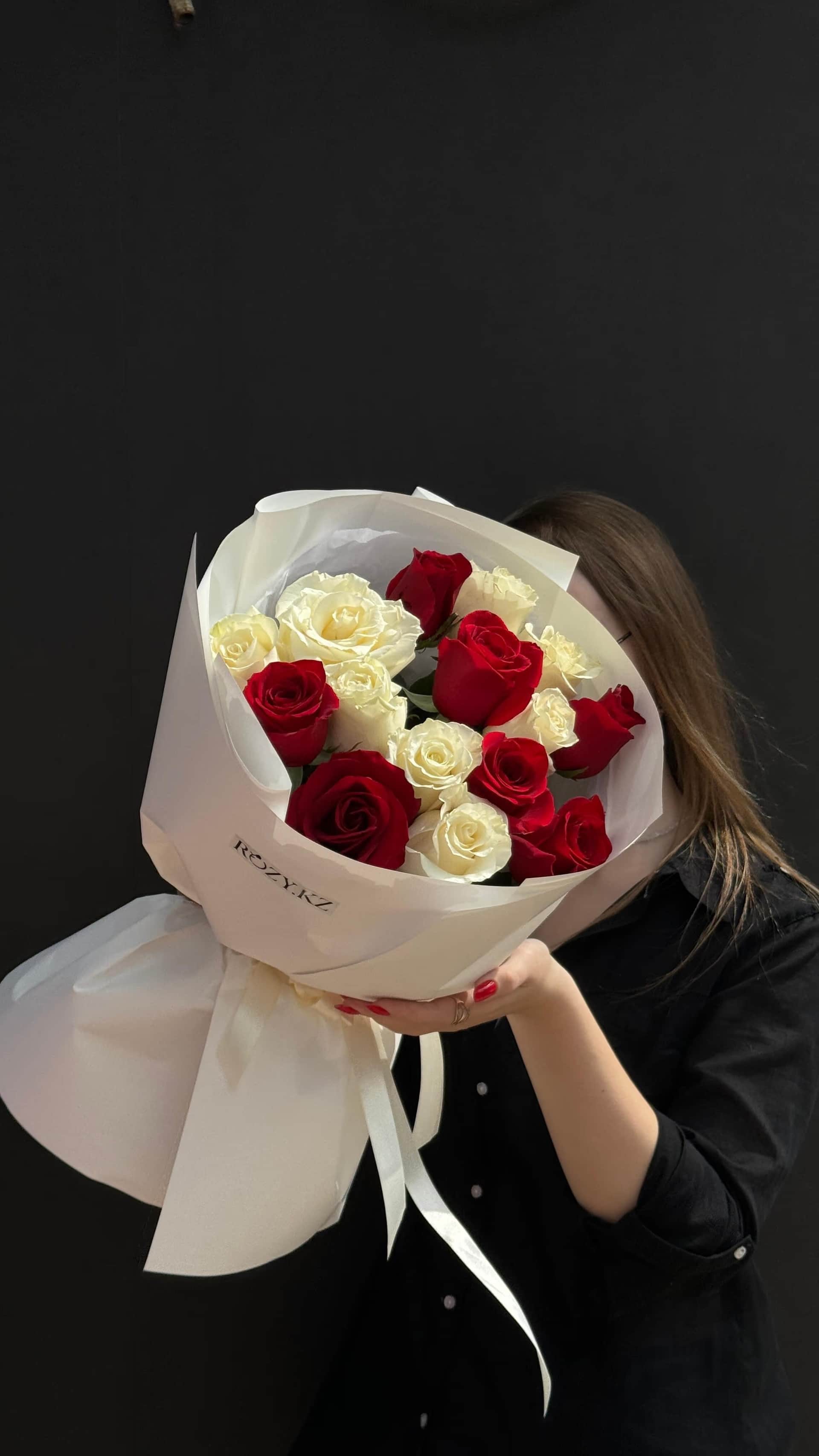
Don't be afraid to mix colors and varieties — it strengthens the message. Red with white stands for a strong union (perfect for a wedding anniversary), pink with peach for gentle gratitude, and adding 2–3 peony roses to a classic bouquet makes it personal without any risk. The main rule: the lighter and warmer the shades, the "safer" the bouquet for a new acquaintance; the deeper the red, the more direct the declaration.
Caring for cut roses: how to extend a bouquet's life
With proper care, good roses last 7–12 days, sometimes longer. Most cases of "fast wilting" are not the flower's fault but mistakes made at the start. Here is the step-by-step routine we recommend to every customer.
One crucial rule first: roses need water within the first minutes after the bouquet reaches you. If the flowers traveled or sat without water for more than half an hour, don't delay — the first trim and getting them into water within the first hour adds far more days of life than any "resuscitation" trick later. You don't have to unwrap them right away: cellophane or kraft paper helps the roses hold moisture and shape while you prepare the vase.
- Trim the stems. Cut 1.5–2 cm off at a 45° angle, always under running water or right inside a container of water — this keeps an air lock from getting into the stem and blocking its drinking.
- Clean the lower part. Remove every leaf and thorn that would sit below the waterline. Under water they rot, breed bacteria and shorten the bouquet's life.
- Use a clean vase. Wash it before use. Fill it with cool settled water — room temperature or slightly cooler, but not ice-cold.
- Add flower food. A sachet of florist's flower food feeds the flower and keeps bacteria in check. None at hand? A pinch of sugar plus a couple of drops of bleach per liter of water will do.
- Place them wisely. Away from direct sun, radiators, drafts and — importantly — fruit: fruit releases ethylene, which speeds up the aging of flowers.
- Keep refreshing. Change the water and lightly re-trim the stems every 1–2 days. This is the most underrated step — it is exactly what adds days to a bouquet's life.
If a rose does droop and drop its head, don't rush to throw it away. The cause is usually an air lock. Re-cut the stem under water and submerge the whole rose (stem and bud) in cool water for 20–30 minutes — the flower often "revives" and lasts several more days. We cover these techniques in more detail in our separate blog posts on bouquet care.
Common mistakes in choosing and care
- Giving an even number. Up to 11–15 roses, stick to odd numbers — that's basic local etiquette.
- Deep red for the wrong recipient. For a colleague or a new acquaintance, pink, white or yellow is the safer route.
- Chasing the lowest price alone. A rose that is too cheap is often "tired" and will last a couple of days. Look at freshness, not just the price tag.
- Skipping the trim. A shop bouquet almost always needs a fresh cut under water — otherwise it drinks poorly.
- Placing roses next to fruit or in the sun. Ethylene and heat are the main accelerators of wilting.
- A dirty vase and stale water. Bacteria clog the stem and even a fresh rose will drop its head.
- Ignoring the variety for the occasion. Peony and white for a wedding, meter-long for a milestone, an intimate bouquet for a date.
A few words about price. It depends on the variety, stem length, season and country of origin: single-head roses start from 7 500 ₸ for a small bouquet, while peony and Ecuadorian meter-long ones cost more due to size and logistics. Current rose prices in Astana are easiest to check right in the catalog, and if you need to buy roses in Karaganda, the full range and delivery are available there too.
How to spot a fresh rose when buying
Freshness matters more than a pretty picture: even a perfectly arranged bouquet of "tired" roses will last two or three days. When picking up flowers in person or accepting a delivery, check a few simple signs — it takes half a minute and saves money.
- The bud. Slightly firm and springy, not fully open. A fresh rose "ripens" in the vase; a bud already wide open is at the end of its life.
- The sepals. The green "whisker" leaves at the base of the bud should be firm and pointing up or outward, not dried out and drooping.
- The squeeze test. Gently squeeze the bud at its base: on a fresh rose it feels dense and springs back. A soft, loose bud is a sign of an old rose.
- The outer petals. On many roses the outer "guard" petals are deliberately left rougher for protection — that's normal, not a sign of wilting.
- Stem and leaves. The stem should be firm, the cut fresh and light in color, the leaves free of blackening and slime. A dark, slimy cut means the rose has been standing for a long time.
- The thorns. On a fresh stem, thorns snap off crisply when pressed and leave a light mark; on an old rose they are limp.
A special note about the "wired head": a wilting rose is sometimes propped up with a hidden wire so the head stays upright. If the bud looks perfect but the stem right below the head feels unnaturally stiff, it's worth asking a question. A good flower studio doesn't abuse such tricks, because its reputation is worth more than one sold rose.
Seasonality, price and why it changes
Roses are sold all year round, but their price and the availability of varieties fluctuate. Understanding these cycles helps you plan a budget and not be surprised that the same bouquet costs more in February than in March.
- Peak dates. Before February 14, March 8 and Nauryz, demand soars and rose prices temporarily rise across the whole market — a worldwide pattern, not one shop's markup.
- Stem length. The longer the stem (40 → 60 → 80 → 100 cm), the pricier the rose: long stems are harder to grow and to ship. Meter-long roses are always the top price tier.
- Country and logistics. Ecuadorian roses cost more than Kenyan or local ones due to their size and the long journey; on ordinary days local roses often win on both price and freshness.
- Variety and rarity. Trendy nude and bicolor varieties, as well as peony roses, cost more than the standard red classic.
A budget benchmark: a small single-variety bouquet of single-head roses starts at roughly 7 500 ₸, while large armfuls, peony and meter-long varieties run noticeably higher. Exact figures depend on current stock, so always check the catalog for up-to-date prices. A tip: if the occasion allows, order outside the absolute holiday peak — the choice of varieties is wider and prices are calmer.
A rose bouquet checklist
- The message. What do you want to say — love, tenderness, gratitude, congratulations? That decides the color.
- The recipient and closeness. Someone close — rich tones and more roses; a colleague or a new acquaintance — light shades and a modest size.
- The occasion. A date — intimate; a birthday — bright; a wedding — white and peony; a milestone — big and ceremonial.
- The number. Up to 15 stems — an odd number; beyond that, round armfuls of 25/51/101 are perfectly fine.
- The rose type. Classic — Dutch; volume — Kenyan; wow — Ecuadorian and meter-long; romance — peony varieties.
- Freshness and delivery. Ask when the bouquet is arranged, request a fresh cut and agree on a convenient delivery time.
Frequently asked questions about roses
How do Dutch roses differ from Kenyan and Ecuadorian ones?
Dutch means consistent greenhouse quality and an even bud all year round. Kenyan roses are cheaper with a smaller bud — great for big armfuls. Ecuadorian is the premium tier: a large head and a long stem up to 80–100 cm. The choice depends on the goal: classic, volume or the wow effect.
How many roses should you give?
As a gift — an odd number: 1, 3, 5, 7, 11, 15, 25, 51, 101. Even numbers are associated with funeral flowers. From 25 roses upward nobody counts stem by stem anymore, so round numbers are fine there.
What are peony roses and David Austin varieties?
These are roses with a densely petaled, globe-shaped bud that opens like a peony. Many of the finest varieties were bred by David Austin — they have a nostalgic shape and a fragrance. The popular wedding variety Juliet is an apricot-peach shade.
How can you make cut roses last longer?
Trim the stems at an angle under water, remove leaves below the waterline, place them in a clean vase with cool water and flower food, keep them away from sun, heat and fruit, and change the water every 1–2 days. This way roses last 7–12 days.
Which rose color should you choose for the occasion?
Love — red and burgundy; tenderness — pink; purity and weddings — white; friendship and joy — yellow; an apology — white or soft pink. When in doubt, pick warm pastel shades — they are almost always appropriate.
Why do roses wilt quickly and drop their heads?
The main cause is an air lock in the stem or a lack of water. Re-cutting under water and briefly submerging the whole rose in cool water helps. A dirty vase, warm water, direct sun and sitting next to fruit also do damage.
What are meter-long roses and who are they for?
These are roses on a long stem of 80–100 cm and above, usually Ecuadorian, with a large bud. They look ceremonial and suit high-status occasions: a milestone, a declaration, a grand gesture. In a vase they need a tall, stable container.
The short version
The rose remains the universal gift precisely because its "language" is so flexible: the type sets the bouquet's character, the color carries the emotion, the number sets the volume of the statement, and the care determines how long that emotion lives in the vase. Dutch roses give you a reliable classic, Ecuadorian and meter-long ones bring grandeur, peony and Austin varieties bring romance. Stick to odd numbers up to 15 stems, choose the shade for the recipient rather than just "whatever looks prettier", and don't skip the half-minute freshness check. Give the stems a fresh cut under water within the first hour — and a good bouquet will thank you with a week of life. And if you'd rather leave the choice to professionals, ROZY florists will build a bouquet for your exact occasion and deliver it fresh.
We'll arrange a rose bouquet for your occasion
Not sure about the variety, color or number? Give us a call — ROZY florists will suggest the best option for your recipient and arrange a fresh bouquet. Express delivery in 60–90 minutes across Astana, Pavlodar and Karaganda, around the clock. Free delivery on orders from 20 000 ₸.
+7 (747) 290-42-53